Voces de Panamá
Una conversación con Caitlin, Simón y Belkis
6:15
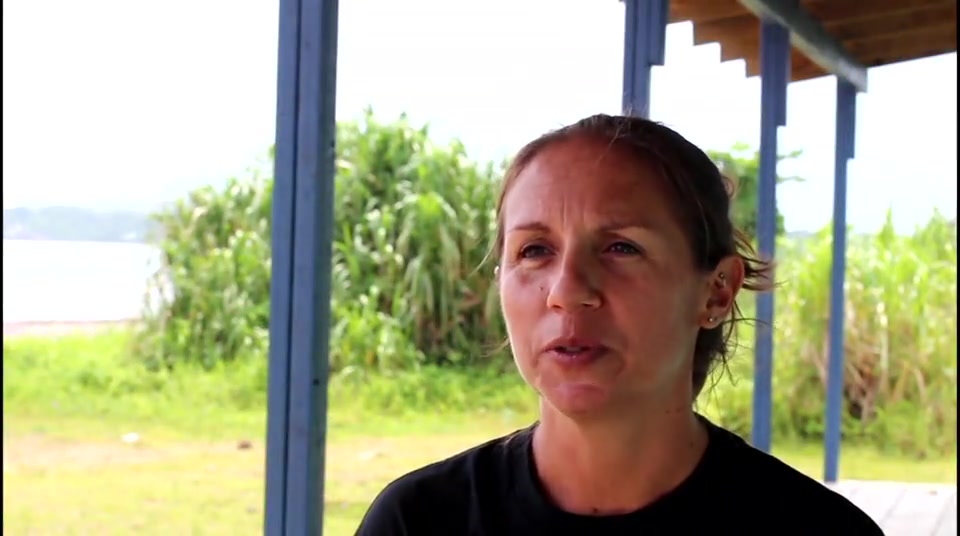
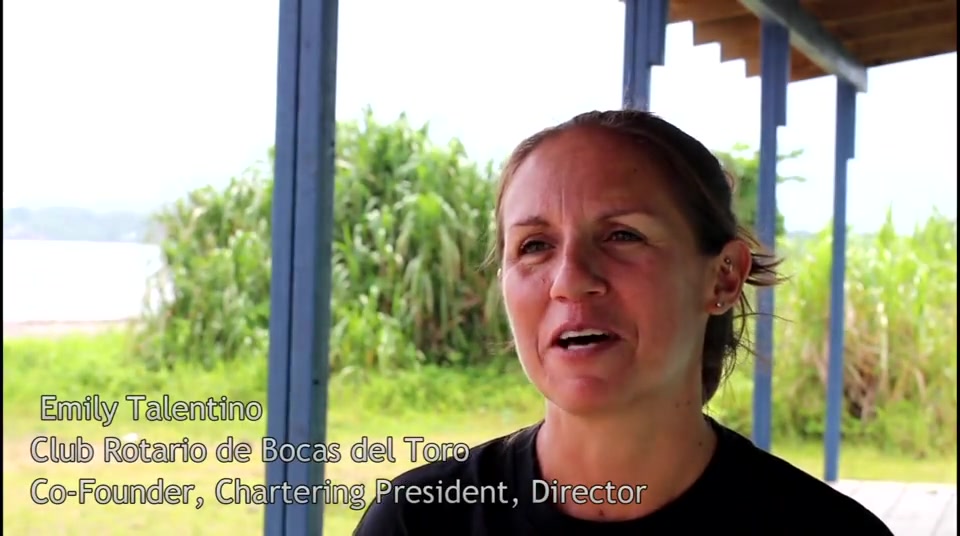
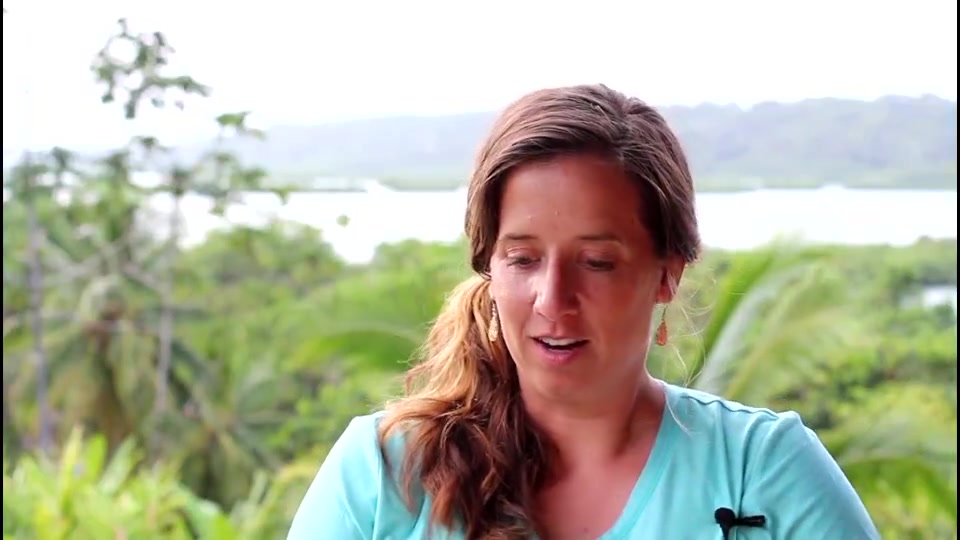
Caitlin, Simón y Belkis participan en una conversación durante una visita de campo. Sus voces forman parte de las relaciones locales que sostienen el proyecto.
Transcripción
Leer en español · traducción
Traducción provisional de la transcripción automática; puede contener errores.
Me llamo Caitlin Terry y trabajo en proyectos de perforación de pozos y captación de agua de lluvia
desde hace siete años.
Aquí en Panamá tengo la oportunidad de colaborar con The Healing Fund. Trabajamos
juntos para ofrecer sistemas de captación de agua de lluvia y perforar pozos para personas
que carecen de acceso al agua potable.
Muchas de las fuentes de agua que hay aquí son superficiales, y esa agua
se contamina con mucha facilidad. Hay vacas que andan prácticamente sueltas y, además,
no hay buenas letrinas ni instalaciones sanitarias. Por eso gran parte de esa
agua superficial se contamina fácilmente. The Healing Fund trabaja con las comunidades para
ofrecer captación de agua de lluvia y perforar pozos. Uno de los aspectos más importantes
de nuestra colaboración es la formación. He pasado los últimos años
trabajando [palabra poco clara] con un hombre llamado Simón. Es un hombre ngäbe de aquí y ha recibido
formación de The Healing Fund sobre cómo instalar sistemas de captación de lluvia. También ha recibido
formación en perforación de pozos y puede ir a estas comunidades. Vive aquí
todo el año y es el experto local en agua. Para que un proyecto de agua, o cualquier proyecto,
sea sostenible, es importante invertir de verdad en la comunidad
y trabajar con alguien de aquí que conozca la cultura
y entienda el idioma indígena. Para el pueblo ngäbe, el español es su segundo idioma.
Por eso trabajar con Simón, que habla ngäbere y también español,
que entiende la cultura y conoce los lugares a los que vamos, donde muchas veces tiene
familiares, significa que las comunidades confían en él.
Simón puede dirigir un proyecto y es la persona a la que van a acudir
durante el año. Al colaborar para financiar el trabajo de Simón y asegurarnos de que tenga
suficientes materiales para seguir perforando pozos e instalando sistemas de captación de lluvia
todo el año, hacemos que el proyecto sea más sostenible. Él
sabe reparar las bombas. Si un pozo se seca, sabe qué hacer
y también sabe reparar un tanque de captación de lluvia. Solo tenemos que transmitirle
los conocimientos y asegurarnos de que tenga disponibles los materiales que necesita. Así
puede continuar aunque nosotros no estemos aquí para trabajar con él.
Mi nombre es Simón. Quiero trabajar con la comunidad en el Ministerio de Agua.
Mucha necesidad en las diferentes comunidades y también ellos no tienen buen agua,
pero estoy buscando pozo para que ellos puedan consumir buenas aguas.
Y ese plan que yo tengo para cada pueblo, cada indígena nove.
Gracias.
Empezamos a trabajar en esta zona de Isla Bastimentos en 2014 e instalamos
un pozo para una comunidad que dependía principalmente del agua superficial para beber.
Con la captación de lluvia, el agua de manantial y los pozos, hemos visto que
la salud de la comunidad ha mejorado mucho.
Ya no hay tantos casos de diarrea como antes.
Era tan común que ni siquiera consideraban la diarrea una enfermedad.
Era simplemente parte de la vida; así eran las cosas.
Ahora hay menos problemas de diarrea porque tienen acceso a esta agua
mediante la captación de lluvia, los pozos perforados y los sistemas adecuados para proteger manantiales.
Uno de los momentos más gratificantes de trabajar con este equipo y con The Healing Fund
fue instalar un sistema de captación de lluvia en el pueblo vecino. Pudimos
dar a la escuela una buena fuente de agua. Éramos unas tres
o cuatro personas del equipo, además de cuatro hombres de la comunidad,
que trabajamos juntos para instalar este sistema de captación de lluvia que iba a abastecer
tanto al maestro como a la escuela. Es muy importante
apoyar a los maestros en estas zonas, porque son comunidades remotas.
Los maestros son enviados a estas zonas y tienen que vivir en estas
comunidades de lunes a viernes. Si no tienen agua,
si les faltan cosas a las que tal vez están acostumbrados en otro pueblo,
eso los desanima mucho y cuesta que se queden aquí. Por eso
me alegró mucho poder trabajar con los hombres de la comunidad
y con el equipo de The Healing Fund para asegurar que tanto el maestro como los alumnos
tuvieran suficiente agua para beber. Me llamo Belkis, Belkis Kiros.
Soy la maestra de la Escuela Valle Grande.
En esta comunidad hay aproximadamente ciento diez habitantes.
Nuestro principal problema siempre ha sido el agua.
El agua es nuestro recurso vital y no tenemos suficiente.
En mis ocho años de trabajo en esta comunidad
he conocido a la organización Rotary,
que ha mejorado nuestra calidad de vida
trayendo tanques para almacenar agua
y ayudándonos en nuestras pequeñas comunidades,
olvidadas por las organizaciones gubernamentales
y las instituciones.
Hace dos años trajeron los tanques.
Ahora tenemos un tanque aquí. En años anteriores, otros miembros de la comunidad también se han
beneficiado. No solo la escuela: también se han instalado tanques de almacenamiento
en varias casas. Nuestras comunidades se sienten totalmente agradecidas por este beneficio. Rotary
nos dio un tanque de agua. Antes, cuando estas organizaciones no estaban,
miembros de nuestra comunidad murieron de muchas enfermedades. Gracias a todos ustedes,
a su colaboración, al amor que llevan en el corazón y a su apoyo, han traído
una gota de esperanza y de alegría a nuestras vidas aquí.
Leer en inglés
Transcripción automática del audio; puede contener errores.
My name is Caitlyn Terry and I'm working in well drilling water projects and rain catcher
projects for the past seven years now.
So here in Panama I have the opportunity to partner with the Healing Fund and we work
together to provide rainwater catchment as well as drill borehole wells for people
that really lack access to safe drinking water.
A lot of the water here, the sources of water are surface water sources and that
can be very easily contaminated. There are cows that are pretty much free range and then as well as
they don't have very good latrine facilities or bathroom facilities and so a lot of that
surface water is easily contaminated. And so what the Healing Sun does is work with communities to
provide rainwater catchment as well as drill borehole wells. And one of the most important
aspects about our partnership is that we've trained and I've spent the past couple years
working sensibly with a man named Simone. He's a local Novi man and he's been
trained by the Healing Fund and how to do rainwater catchment and he's been
trained in drilling and he can go into these communities and he lives here
full-time and he is water expert here. For a water project or any project really
to be sustainable it's important to have to really invest in the community
and to invest with a local with someone that understands the culture,
understands the native language the Novi people Spanish is their second language
and so to be working with Simone who speaks Novi who also speaks Spanish and
he understands the culture he's familiar a lot of the places we go he has
relatives in those areas and so so he's trusted in those communities and so
Simone can kind of head up a project he's the person they're going to go
throughout the year. So as we partnered to fund Simone and to make sure he has
enough supplies to keep drilling wells and keep doing rainwater catchment
throughout the year, that's the way a project becomes most sustainable. He
understands how to repair the pumps. He understands if a well goes dry what to do
or how to repair a rain catchment tank. So we just have to instill in him
the knowledge and make sure he has the supplies that he needs available and he
can continue even when we're not around to work with him.
Mi nombre es Simón. Quiero trabajar con la comunidad en el Ministerio de Agua.
Mucha necesidad en las diferentes comunidades y también ellos no tienen buen agua,
pero estoy buscando pozo para que ellos puedan consumir buenas aguas.
Y ese plan que yo tengo para cada pueblo, cada indígena nove.
Thank you.
We first started working in this particular area of Isla Bastimentos in 2014 and we installed
a well for a community that used primarily surface drinking water.
With the rain catchment, with the spring water and as well as the wells, we found that
the health of the community has really improved.
There are not as many cases of diarrhea as there used to be.
so common that they wouldn't even consider having diarrhea to be an illness.
It was just a way of life, it just was how it was.
And so now there's not as many diarrheal issues because they have access to this water that
through rain catchment, through borehole wells and through proper spring containment systems.
One of the highlights of working with this team and working with the Healing Fund
was doing rainwater catchment in the village adjacent to us. We were able to
provide a good source of water to the school. They said there were about three
of us, four of us from our team, and then four men from the community that
worked together to provide this rain catchment that was going to give water
to the teacher as well as the school. And it's really important to
provide for the teachers in these areas because these are remote villages.
These teachers are sent out to these areas and they have to live in these
remote communities for Monday through Friday and so if they don't have water if
they don't have things that maybe they're used to having in another town
it's really discouraging it's hard to get teachers to stay here so it was
really I was really happy to be able to work with the guys in the community and
the Healing Fund team to make sure that the teacher as well as the students
would have an ample supply of drinking water. My name is Belkis, Belkis Kiros
and I am the teacher of the Valle Grande School.
In this community there are approximately 110 inhabitants.
Our principal problem always has been water.
Water is our vital resource and we don't have enough of it.
For my eight years working in this community,
I've gotten to know the organization Rotary
that have made our quality of life better,
bringing reserve tanks of water,
helping us in our small communities
that have been forgotten by government organizations
and institutions.
So two years ago they brought the tanks.
We have a tank here now. In previous years other members of the community have
benefited not just the school but in various homes they've installed reserved
tanks. Our communities feel totally grateful with this benefit. The rotary
gave us a tank of water. In past years when these organizations did not exist
members of our community died from many illnesses. So thanks to all of you
your collaboration, the love in your heart and your support has brought a
a drop of hope, of happiness to our lives here.