In this story
2005: it began with rainwater
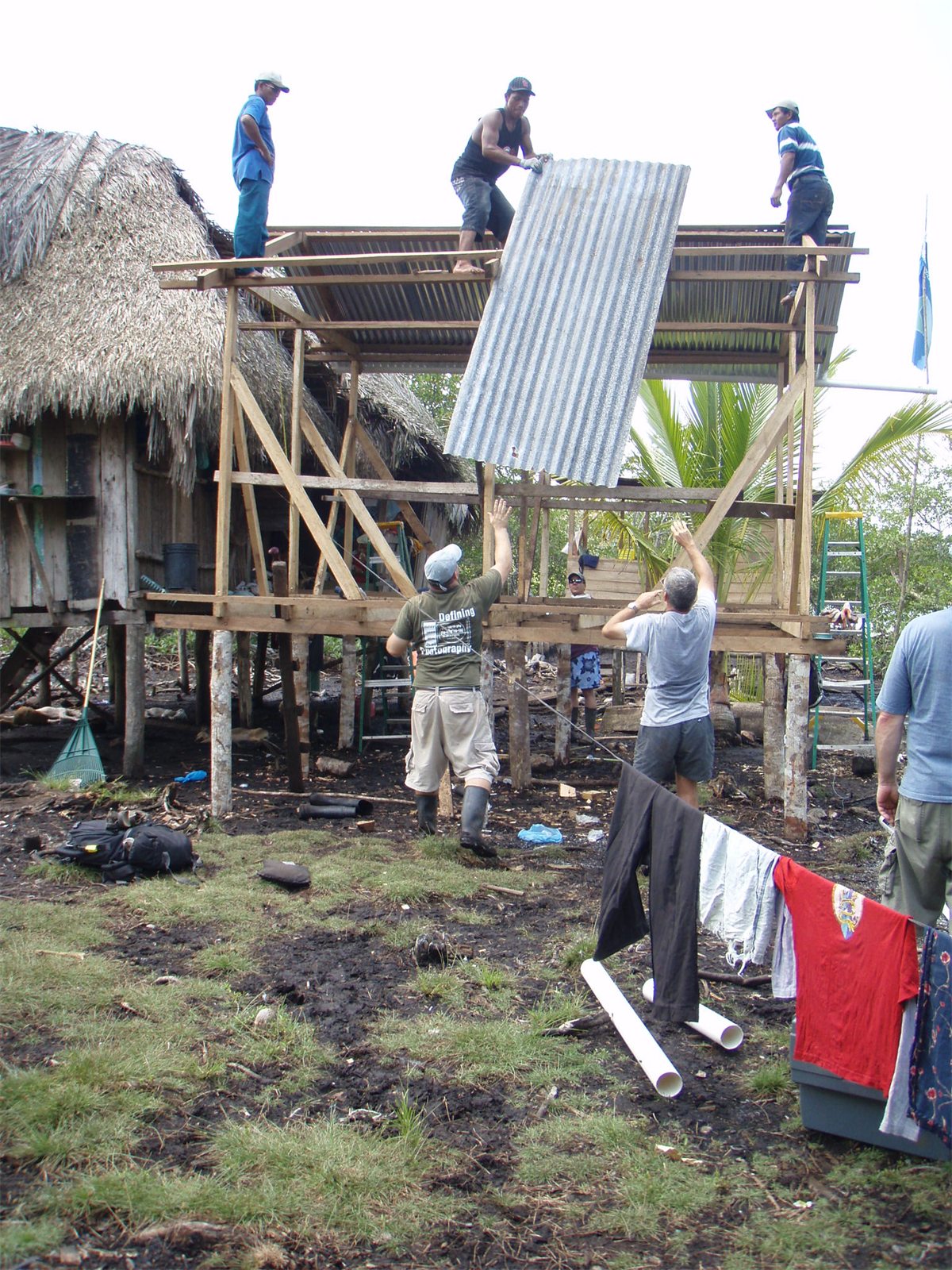
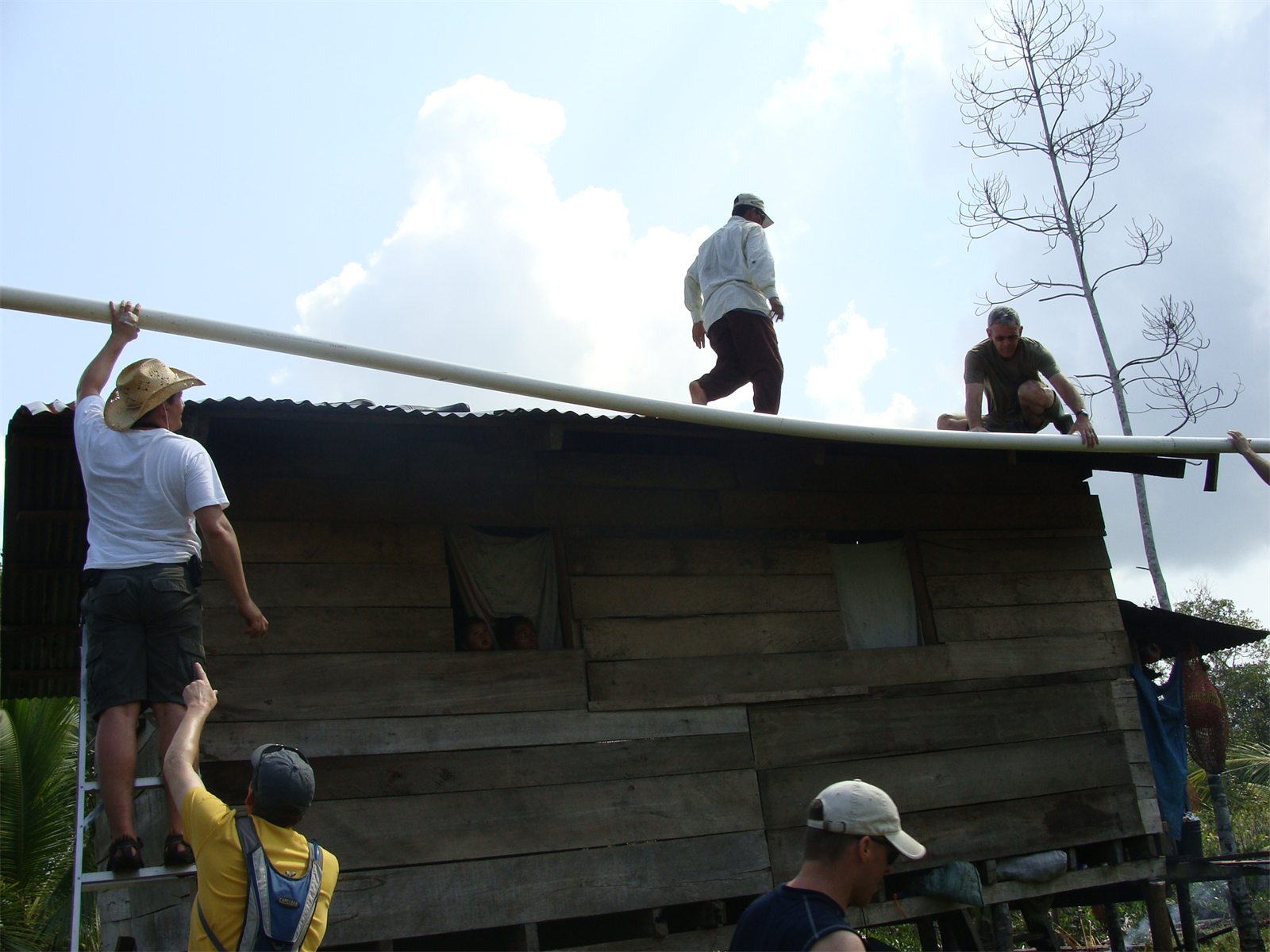
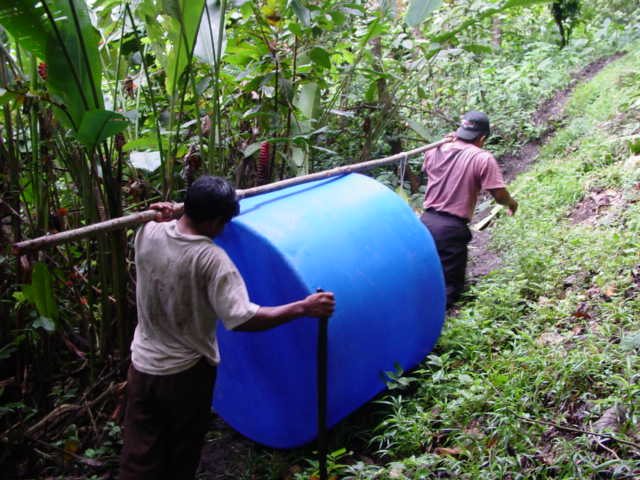
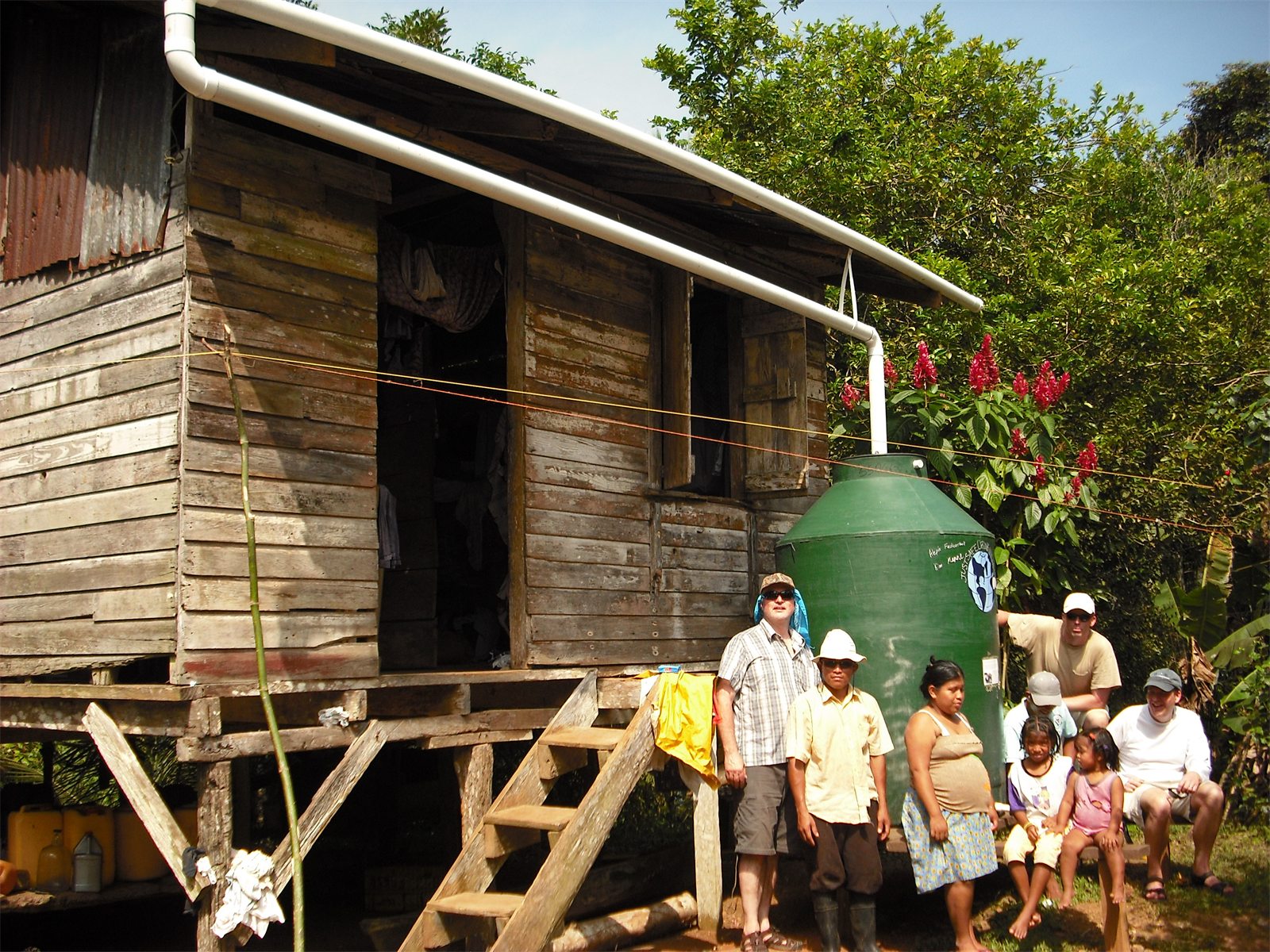
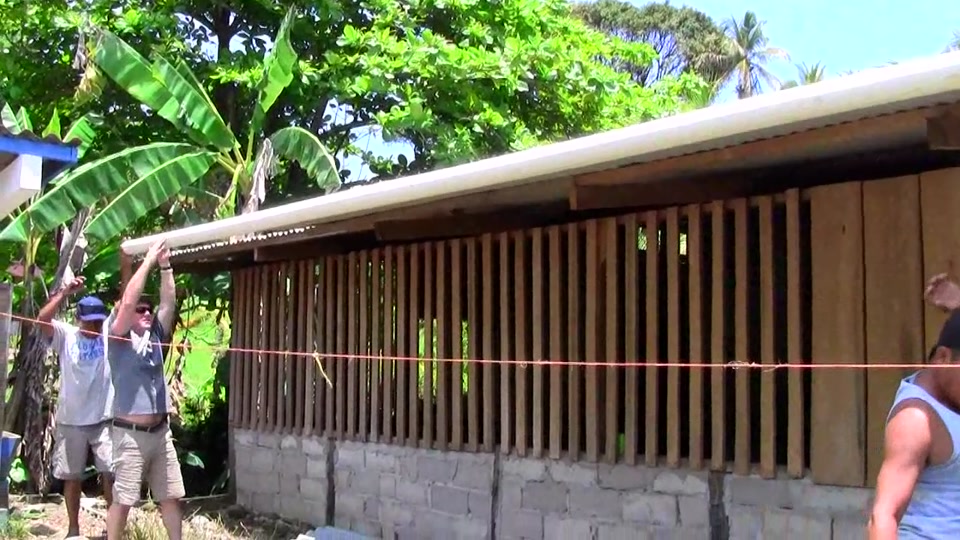
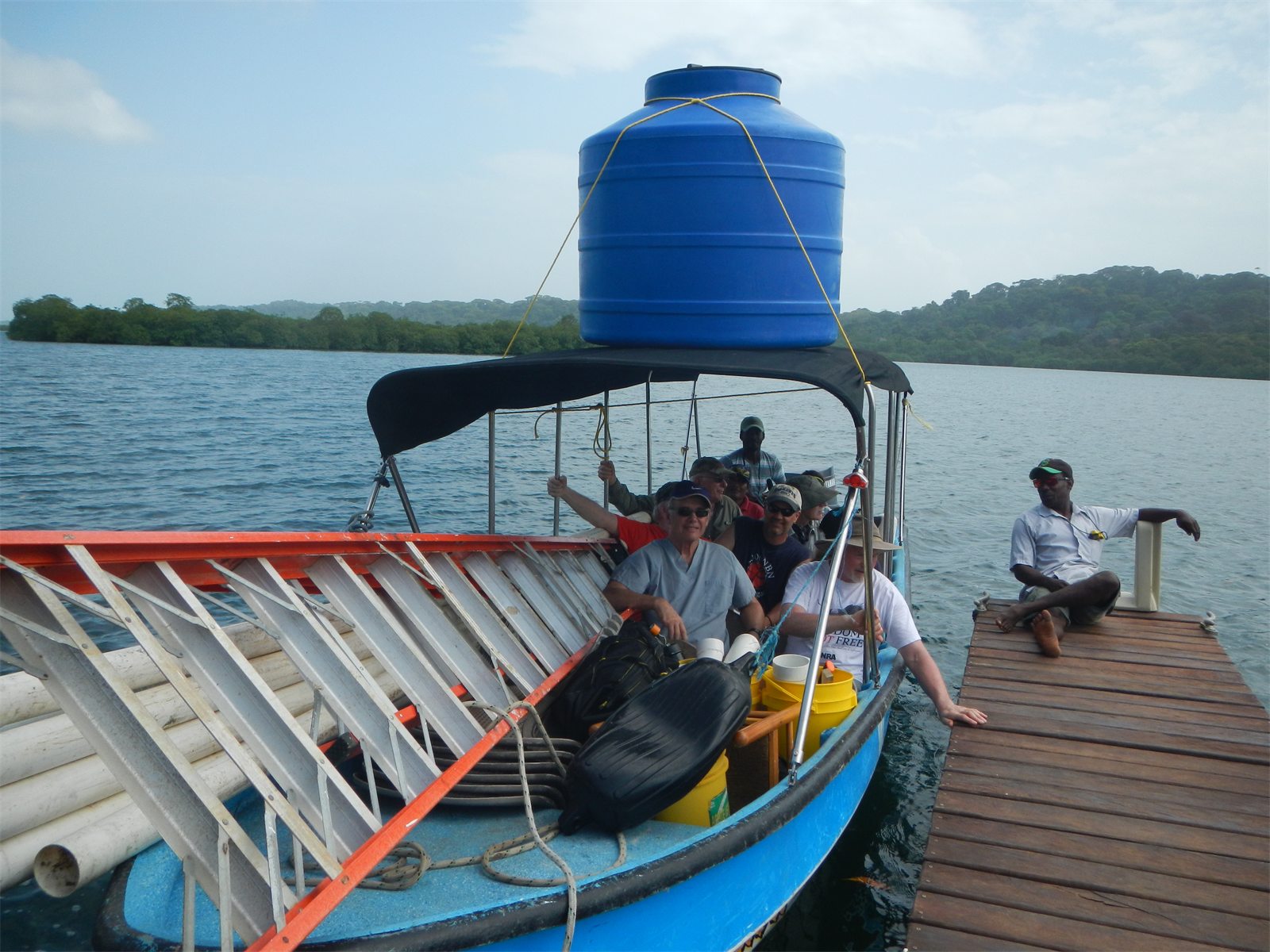
We started going to Panama in 2005. From 2005 until we drilled our first well in 2011, our only water solution was rainwater catchment: collecting water from roofs, carrying it through gutters, and storing it in tanks for families to use. Getting the materials to island communities was part of the work, long before we could begin an installation.
These systems were expensive, and they depended on the rain. They worked during roughly nine rainy months of the year, but the dry season exposed their limits. When the rain stopped for three months, the solution could no longer provide the reliable supply families needed. We wanted to find something that could work beyond the rainy season.
Archive source
0 Water Catchment\team loaded in boat with tanks, pvc for gutters and ladder.JPGThe question that kept coming up at Rotary
I visited Rotary clubs to talk about the outreach, invite volunteers to join our trips, and raise money for supplies. At almost every presentation, someone would ask, “What about drilling wells?”
At first, the question made me chuckle. In my mind, drilling a well meant a huge rig going hundreds of feet into the ground. The islands where we worked had no roads. How could we possibly get that kind of equipment there? It seemed out of reach.
But enough people asked the question that I finally began researching what was available. That repeated encouragement from Rotary changed the direction of our work. We discovered that a well did not always require the machinery we had imagined.
2011: Hydromissions helped us drill our first well
Our research led us to Hydromissions, an organization that trained people to drill wells with a portable hand auger. Its teams could travel to a country, bring equipment and supplies, and teach people how to do the work. That was a very different possibility from bringing in a large drilling rig.
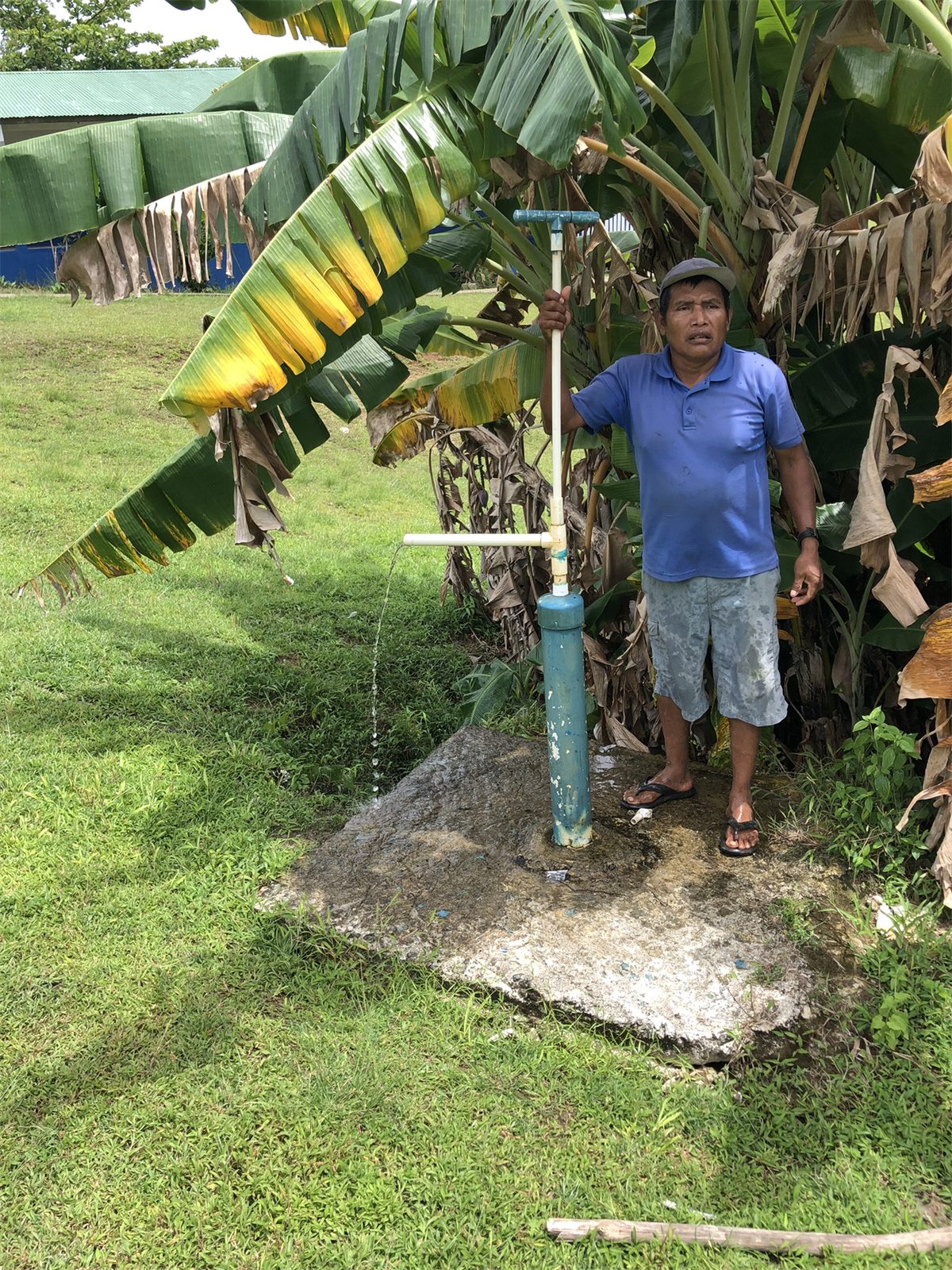
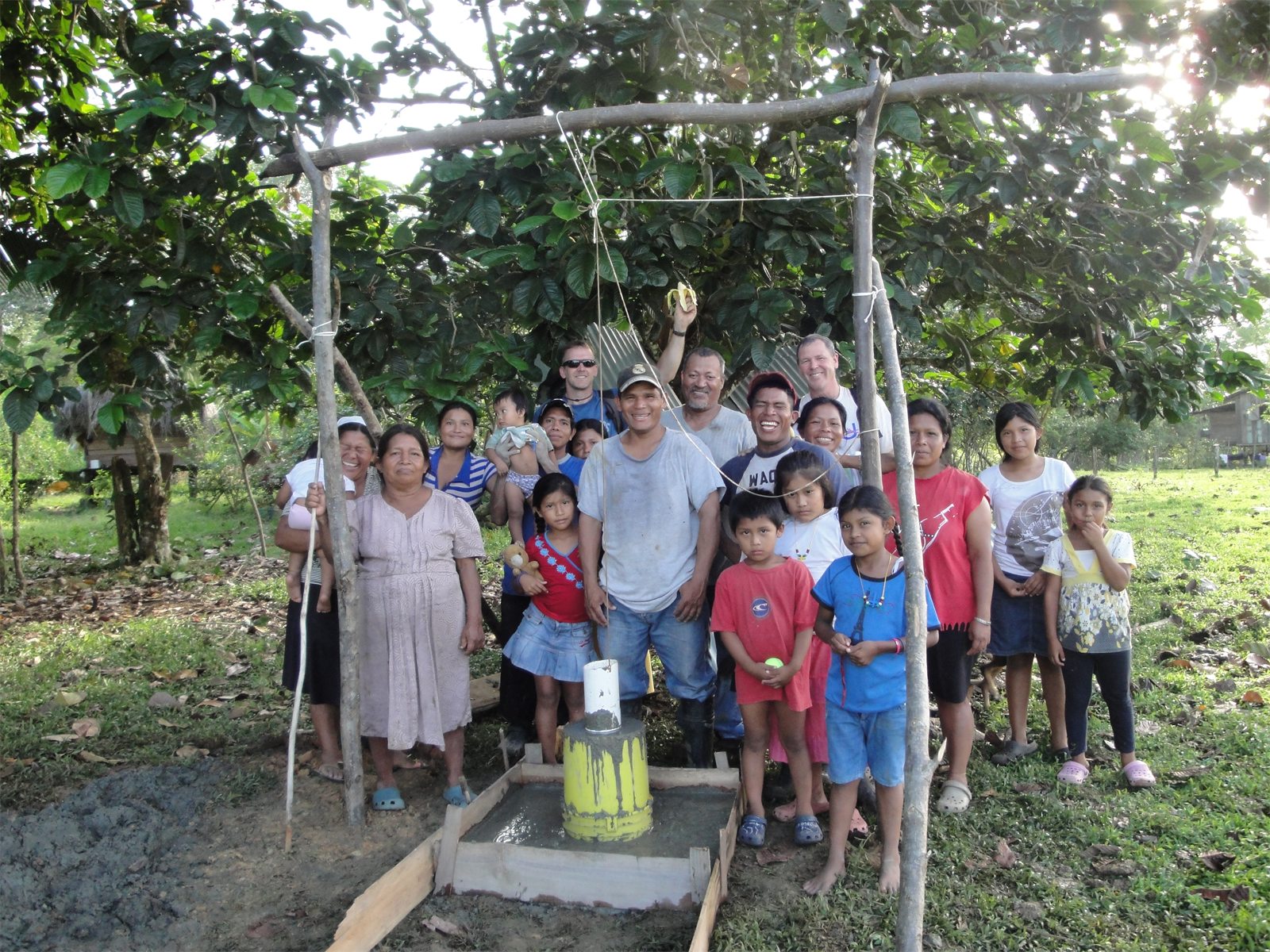
In 2011, Hydromissions sent a team to Panama. They met us there, trained us, and helped us drill our very first well. The photograph at the top of this page is from that first well in April 2011. We were hooked. Drilling wells became the focus of our work.
2011–2015: building 2–10 wells a year
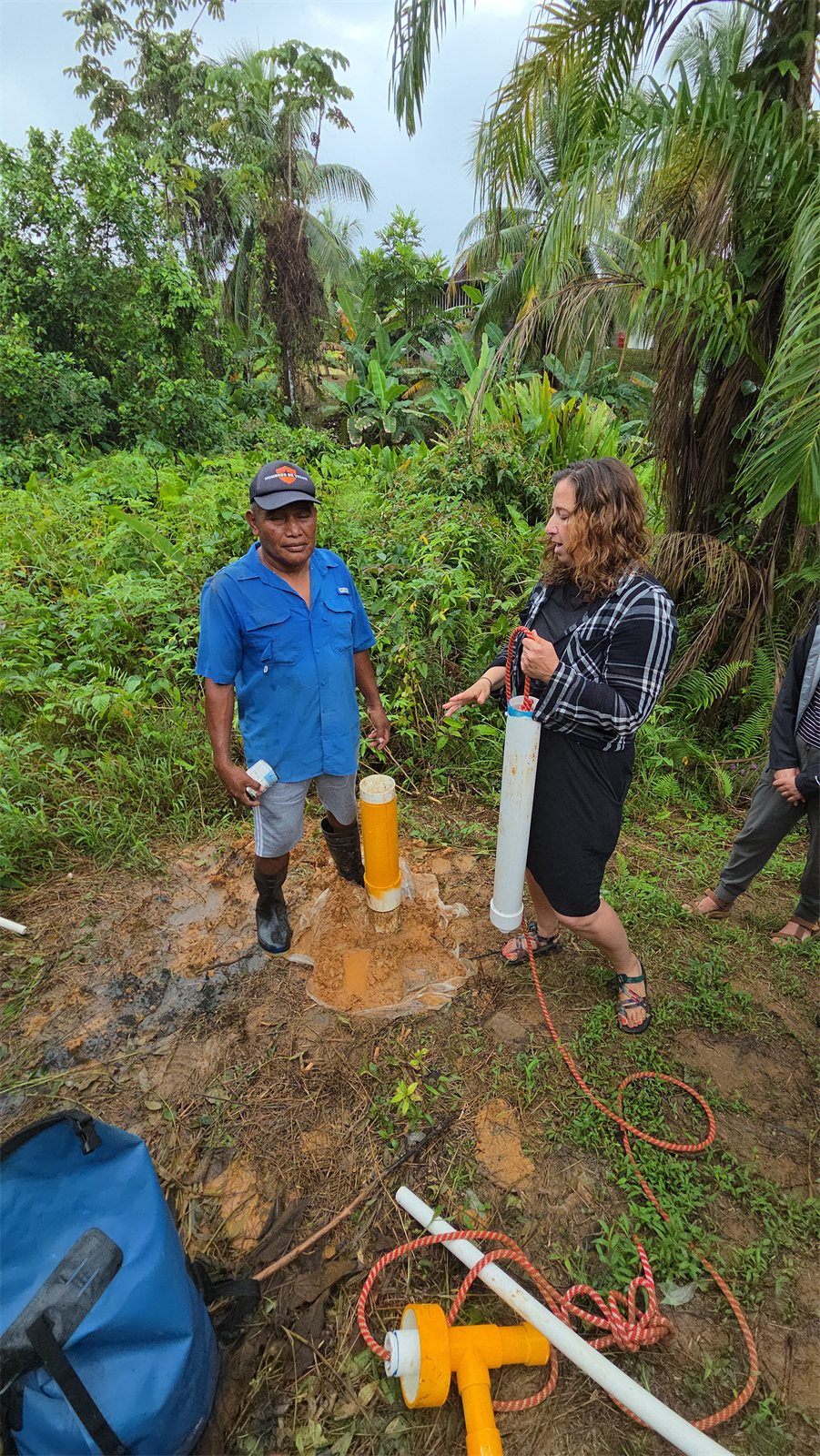
Starting in 2011, we used bailing buckets to lift water from the wells. That was the method Hydromissions had taught us, and it worked without electricity or an engine. Between 2011 and 2015, we completed between 2 and 10 wells each year. Our visiting teams did the drilling, and it was hard physical work.
We continued visiting Rotary clubs, sharing the progress, gathering volunteers, and raising funds. This time, the question was about pumps. People often suggested solar power, gasoline engines, or electric pumps.
Those approaches did not fit the communities we served. Electricity was hard to come by, solar systems were too expensive for families to afford, and powered pumps were not a practical solution for our setting. Again, people asked often enough that we began looking for another answer: a manual hand pump that could be built and maintained with simple materials.
Archive source
2b CasingTheWell\1c2 CaitlinExplainingCleaningOutWellSedimentWithBailingBucket.jpg2013: our first hand pump
We found ideas for rudimentary manual pumps used in African communities with very limited resources. Their basic operating principles were much like the ones we use today. We began asking how we could adapt those ideas to materials readily available to us in the United States and build pumps we could take to Panama. We built our first hand pump in 2013.
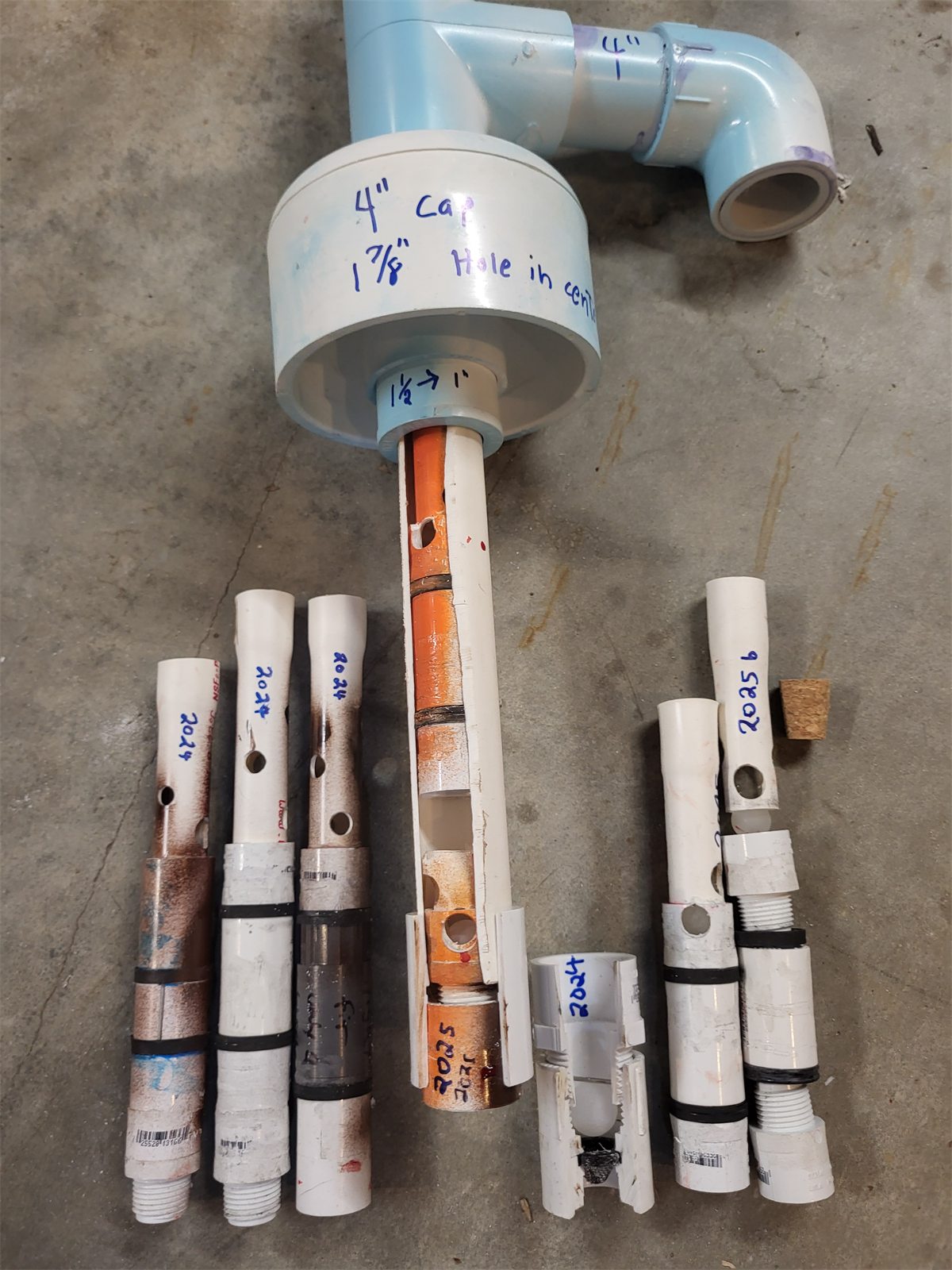
Development has continued since 2013, through many versions and experiments. Each trip, each repair, and each workshop gave us something else to improve. We kept working toward components we could make in batches, transport easily, and use in a pump that could be taken apart and repaired.
That work eventually led to our current universal ½-inch foot valve. The small valve is a major result of all those years of trying, learning, and revising.
Archive source
1b PumpSpigotAssembly\IterationsOfInnerValveDesigns.jpgOne small valve, several jobs
We can now make hundreds of universal foot valves relatively easily and ship them to Panama ahead of our visits. When the team arrives, the valves are already there, ready to become part of the next batch of kits.
The same design serves as the fixed foot valve at the bottom of the 1-inch outer pump pipe and as the moving valve on the inner ½-inch pipe. We also use two of these universal valves inside each bailing bucket. Sharing one valve design across these jobs helps us prepare supplies and keep replacement parts available.
2016: annual trips and a partnership with Simón
In 2016, we began coordinating annual trips with Hydromissions. That same year, Simón, a local Indigenous man, joined the project and helped us with the wells. He loves his people, wants the best for them, and has a kind and giving heart. Finding the right local partnership took time, but working with Simón proved to be a turning point. He has been a godsend to this work.
Since he joined in 2016, our partnership has grown from part-time help to a full-time role. He knows the communities, understands the families, and can keep the work going when our visiting teams are back in the United States.
We have also watched him grow from a quiet, shy worker who wanted to do a good job into a community leader. Families turn to him for help and advice. His care for his people is at the heart of the partnership, and seeing that confidence and leadership grow has been one of its greatest rewards.
Archive source
2b CasingTheWell\CaitlinAndSimonWithInstalledPumpWithNearbyBailingBucket-WellStillNeedsConcrete.jpgFamilies build the wells and take responsibility for them
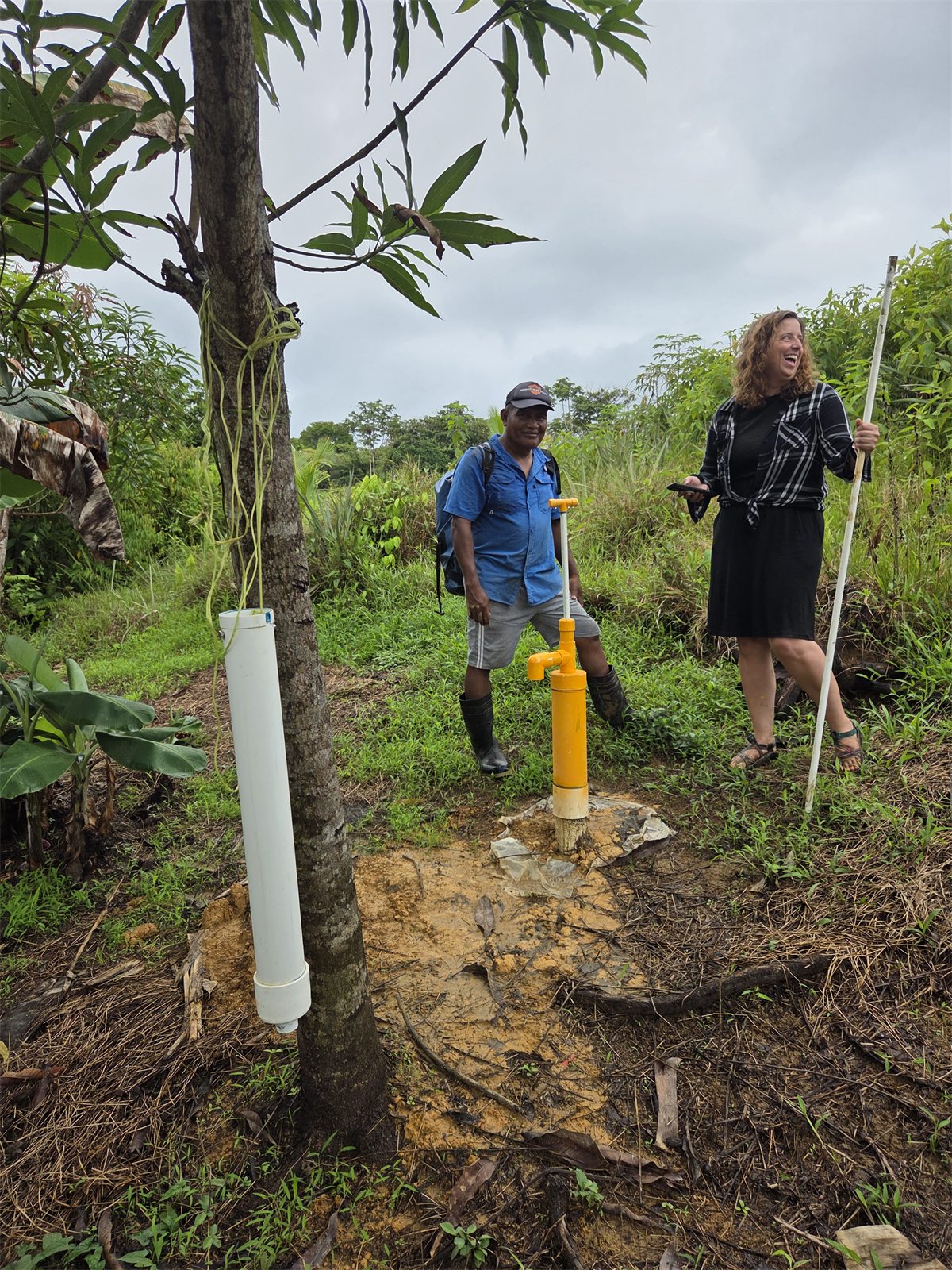
Simón does not drill all these wells by himself. He works with motivated, responsible families who care about having water and are willing to put in the hard work. Families now find him and ask to take part. He teaches and guides them while they contribute the physical labor—their sweat equity.
That willingness matters beyond the day of drilling. A family prepared to work for its well is also more likely to do the regular cleaning and maintenance that keep it useful. The partnership begins with participation and continues with care.
Together, we have completed more than 250 wells over the years. Since joining in 2016, Simón has helped grow the work from about 20 wells a year to about 60 a year today, working alongside local families. A full-time local partnership has made it possible to accomplish much more than a visiting team could do on its own.
Visiting teams now prepare the year’s supply of kits
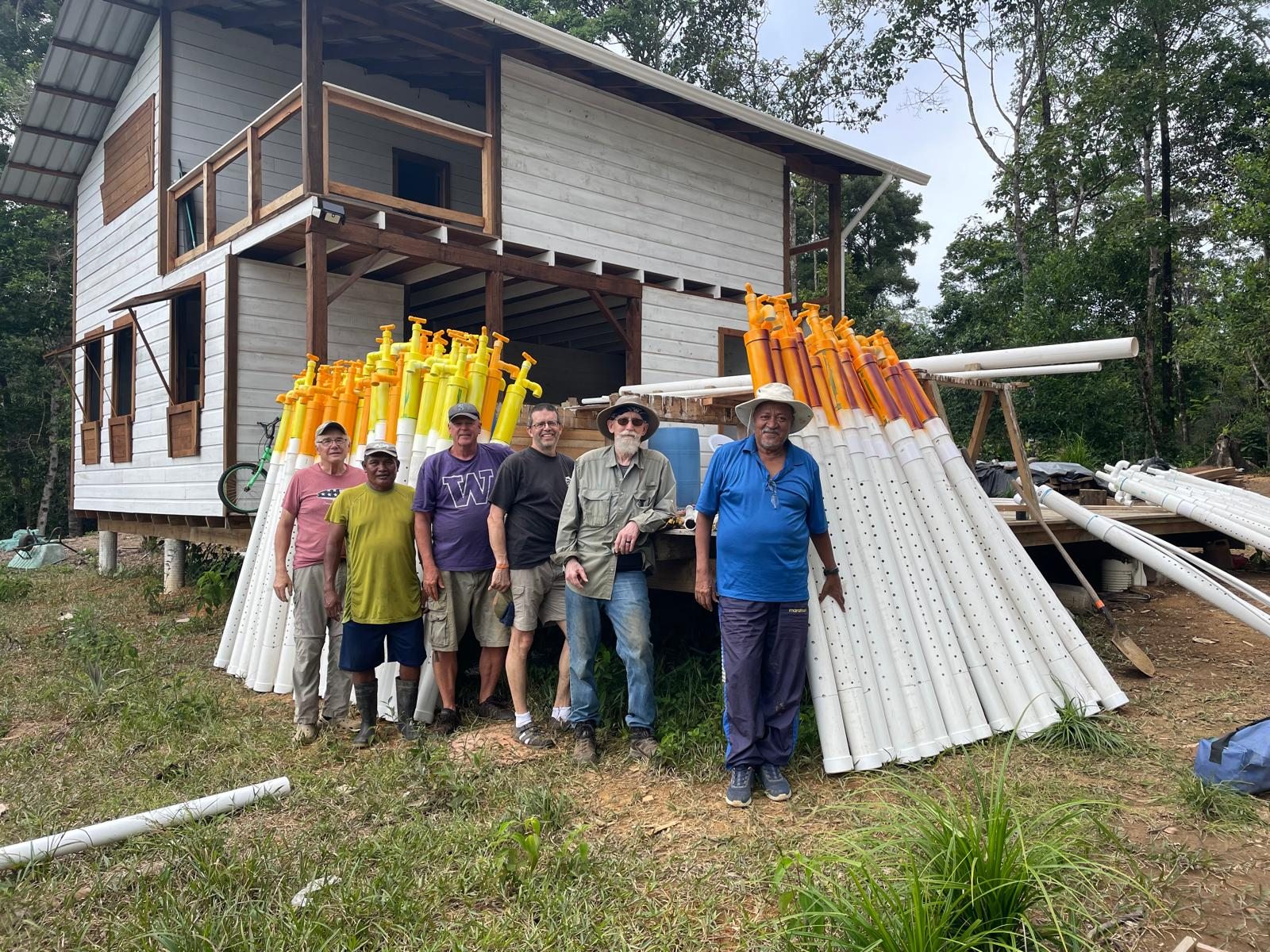
Our annual trips usually last about two weeks around spring break. Today, the best use of that time is bringing supplies and building pump kits. A team will prepare between 50 and 75 kits, and sometimes more when there is time.
We store the completed kits at Simón’s home in a small well shed created for that purpose. The visit may last only a couple of weeks, but those supplies keep moving into the communities long after we leave. Simón drills throughout the year, working with families and using the kits as each well is ready.
This has changed what a trip can accomplish. Instead of measuring a visit only by the wells we could drill ourselves, we prepare materials that support many months of locally led work.
Archive source
1c PumpCreation\4e Team with a years supply of pump kits.jpgRotary, volunteers, and a willingness to rough it
Back in the United States, visits to Rotary clubs continue to bring support and introduce us to people who want to serve. Rotarians and other volunteers have joined us from Washington, Oregon, California, Colorado, Texas, Montana, New Jersey, and Ecuador. People of many ages, backgrounds, and skills have taken part.
The accommodations are basic, so volunteers need to be ready to rough it. For many years we slept on cots, had no running water, and collected rainwater just as the families around us did. These trips are a good fit for outgoing, energetic people who want to serve, work with others, and experience life in the communities.
Volunteers pay their own travel and trip expenses. Their contribution is more than workshop labor: it is their time, their willingness to learn, and the relationships they build. We also deeply appreciate the people who say, “I’m not interested in traveling, but I believe in this work and want to help.”
How gifts keep the work going
The overall cost of a well is about US$200, including materials, labor, fuel, and related expenses. The actual cost varies. We are grateful when an individual helps support one well, or an organization helps support ten or twenty. Each contribution helps keep the work moving.
The roles are important: The Healing Fund raises money for PVC and the supplies needed to make the wells and pumps. Hydromissions covers Simón’s salary, fuel, and other operating expenses. Visiting volunteers pay their own way. This combination puts materials in local hands while supporting the year-round guidance that makes the program work.
If you would like to give, use Hydromissions’ giving page and select “Water Projects”. Whether you join a trip, help prepare components, or contribute funds for supplies, you become part of a partnership that began with rainwater and keeps growing through the work of families.